
Broward County Arrest Log
Broward's dated arrest log lives in the BSO Booking Blotter. Enter a start and end date. The catch is that each query covers just two days. Results also lag about 24 hours behind booking. So a full week of Broward arrests takes three or four adjacent searches strung together. BSO runs a separate Arrest Search alongside it. It is refreshed every 15 minutes for current custody. Reconstructing several dates at once is where the blotter shines. Exporting rows works well too, but it is not a court history. City police departments hold their own reports. BSO owns the county booking data. The Broward Clerk keeps the case docket that follows.
Read Broward Arrest Entries
Map out your date ranges first. Keep the boundary dates in view so that no day gets skipped or counted twice.
- Open the official blotter and select no more than two days.
- Review the booking dates and identifiers, then save the range used.
- Repeat with the next adjacent dates until the week is covered.
- Use the Excel export for many rows while preserving the query dates.
- Check Arrest Search for current custody or a booking too new for this log.
- Use the Clerk docket for filed charges and the disposition.
For a faster route to current bookings, the Daily Arrest Report covers BSO's same-day search, while the dated Broward Booking Blotter page appears below.
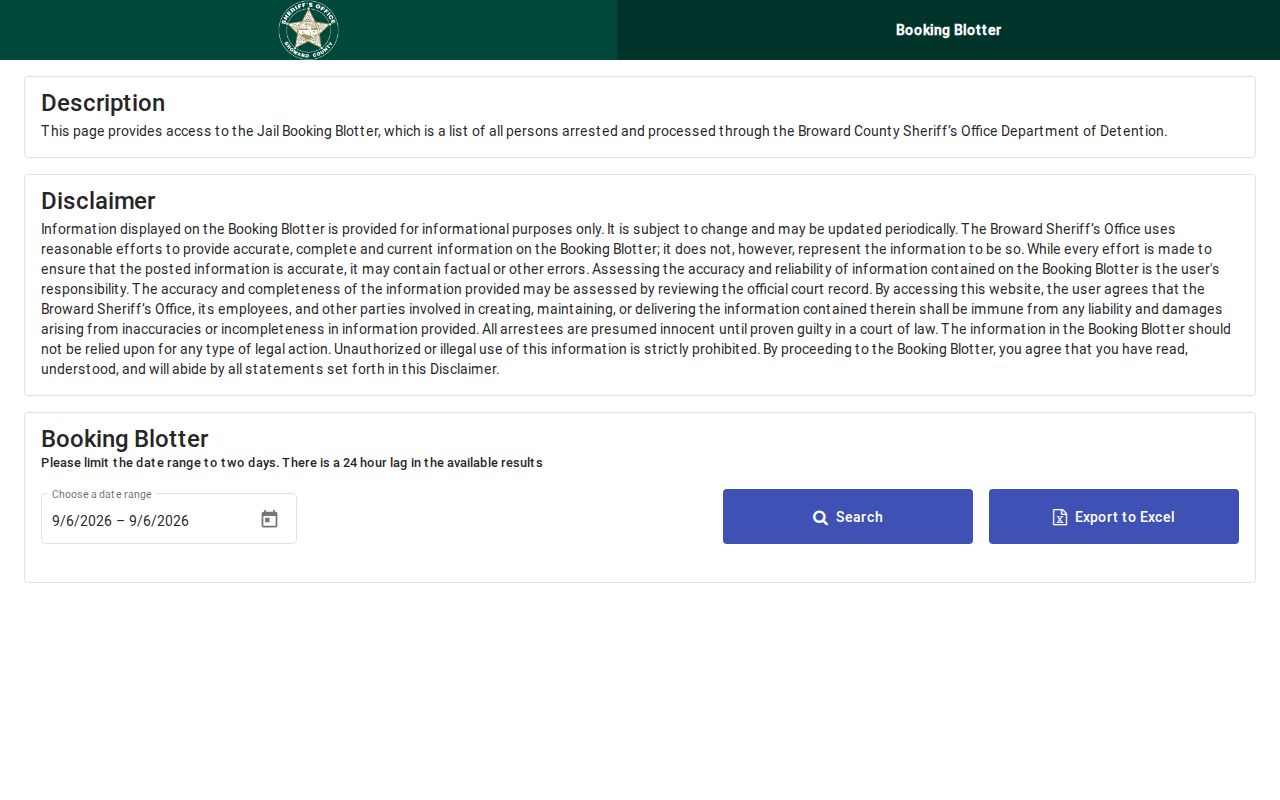
The range controls explain why a weekly review must be assembled from smaller searches.
Broward Blotter Record Fields
Think of the blotter as a dated booking layer. Florida's criminal-justice schedule lists fields like date, booking number, name, charge, court, arresting officer, bond, release method, and return date for commitment and release lists. A given BSO row may carry fewer labels or different ones.
| Field | Reading rule |
|---|---|
| Name | Confirm with other identifiers; similar names are not enough. |
| Booking date | Places the arrest record within the selected range. |
| Arrest or booking number | The strongest reference for a later request. |
| Arresting agency | May be a city department even though BSO booked the person. |
| Charge and bond | Booking-stage entries that can change in court. |
| Release method | Ends custody but does not necessarily end the case. |
Not every blotter row includes a photo. When one exists, the arrest-number detail page in BSO Arrest Search is the clearer official photo path.
Broward Weekend Posting Delays
Someone arrested Saturday may still be moving through intake, database checks, court review, or the blotter's stated delay when you search Sunday. Holidays cause the same mismatch. The fix is patience. Search the actual arrest dates once the lag passes, then check neighboring dates if the expected row is missing. Resist calling each busy cluster a crime surge. Volume can come from delayed posting, court timing, enforcement pushes, or how you split the queries. To trace a booking onward into court and other custody systems, the Broward County arrest hub lays out the steps.
Older Broward Arrest Records
What is online is not the same as what is retained. Under Florida's GS2 schedule, booking records and commitment or release lists must be kept. The minimum is one anniversary year after release. Summary jail docket books stay permanent. Arrest offender information follows an administrative-value rule instead. None of that guarantees an old row still displays online. For older Broward arrest records, file a BSO records request. Include the name, date range, arresting agency, record type, and booking or CIS number. City departments handle their own incident reports. The Clerk handles court filings. Sealed, expunged, juvenile, victim-protected, or exempt records may be withheld. Note: A missing row can reflect roll-off, release, correction, restriction, or an outage. That is not proof that no arrest occurred.
Broward Arrest News Is Selective
Local 10, NBC 6, WSVN, the Miami Herald, CBS Miami, and the Sun Sentinel all cover Broward arrests they deem newsworthy. A story might attach an affidavit, an agency statement, or a court update. Most Broward bookings never make the news at all. That gap is why editorial coverage can't replace the official arrest log, though the Local 10 local-news stream shows the pattern well.
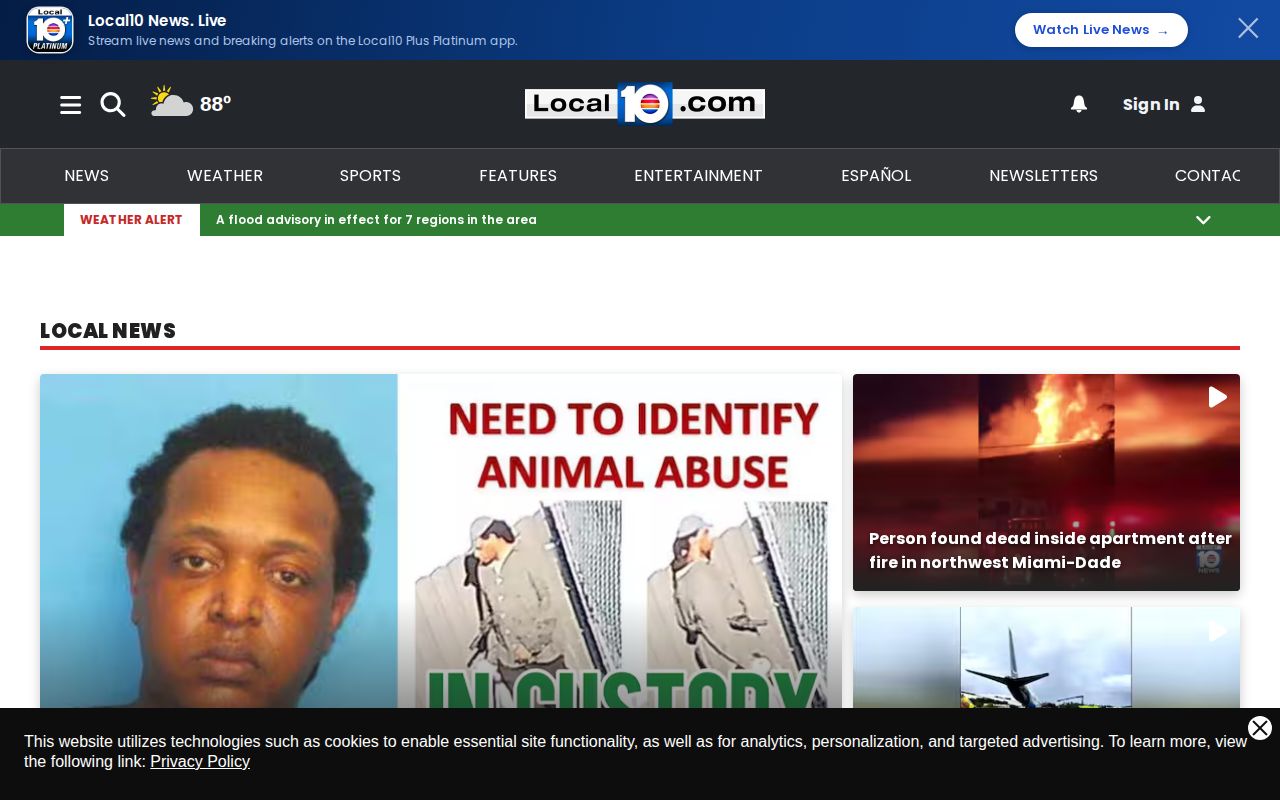
The stream offers selected context, not a complete named roster. WSVN and the other outlets pick stories the same way. A report can explain why police acted or what a lawyer later argued. Verify it against the affidavit and court docket. Remember that publication dates differ from arrest dates. Save both. That way a news update never gets mistaken for a fresh booking.
Unofficial Broward Booking Copies
RecentlyBooked, Mugshots.zone, Busted Newspaper, and similar aggregators copy public data, keep stale pages, drop agencies, or display photos without current case status. Treat them as secondary sources. BSO and the Clerk come first. The RecentlyBooked Broward section appears only to illustrate one unofficial interface.
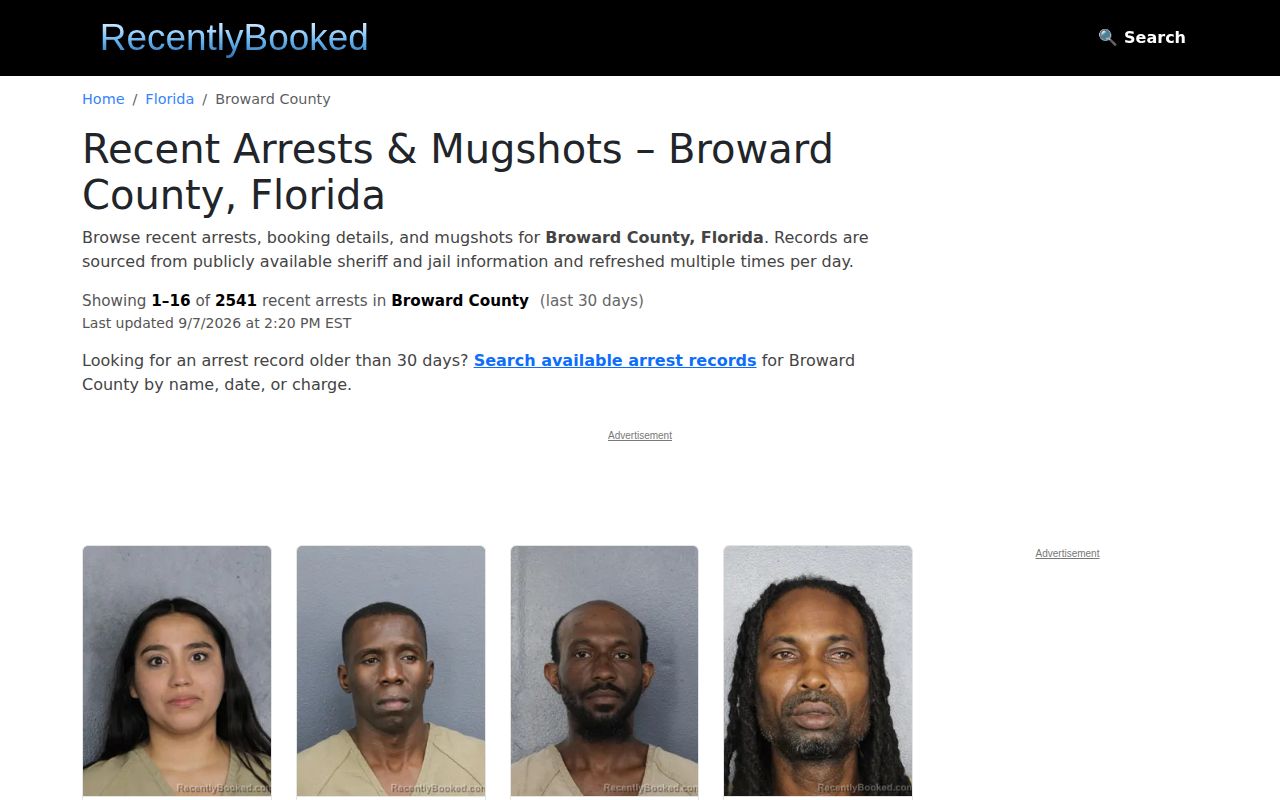
Showing an unofficial page is not an endorsement. It is not a current official record. Nor is it a gallery to browse.
Broward Trends Versus Arrest Logs
Fort Lauderdale Police releases aggregate arrest statistics broken out by district and zone. It also discusses its move toward NIBRS reporting. Numbers like those help with broad trend analysis. What they cannot do is tell you who actually entered BSO custody on a particular date. Keep person-level blotter rows and aggregate counts in separate mental drawers. The blotter answers dated bookings. Arrest Search answers current status. The Clerk answers case outcomes, and statistics answer only questions about volume.
Agency scope matters just as much. BSO's blotter gathers county detention bookings from law-enforcement agencies across Broward. An FLPD trend chart covers only activity attributed to Fort Lauderdale reporting zones. A Local 10 story might spotlight one event anywhere in South Florida. Blend those sources without their labels. You risk inflating totals, counting a single event twice, or pinning a county booking on the wrong municipal trend.
A sound weekly review needs disciplined bookkeeping. Preserve the start and end dates from each blotter query. Note the retrieval time. Then lean on the booking number as the durable reference. A row can shift later. That saved context shows exactly what the public interface reported at that moment. The arresting agency still holds final authority for corrections.
Distinguish arrest dates from release dates and return dates, too. One person can surface in more than one exported range when events cross your chosen boundaries. Deduplicate by booking number first. Then check any apparent repeat against BSO. Only then treat two similar rows as two separate Broward arrests.